
Decarbonizing Building Operations
How smart buildings, energy retrofits and building electrification can accelerate the decarbonization of US buildings.

Opportunity Overview
US residential and commercial buildings were responsible for 40% of energy use in 2020. This includes the energy used to heat and cool structures, the electricity to power them, as well as the associated electricity losses. Correspondingly, buildings drove 36% of US carbon emissions from burning fossil fuels.
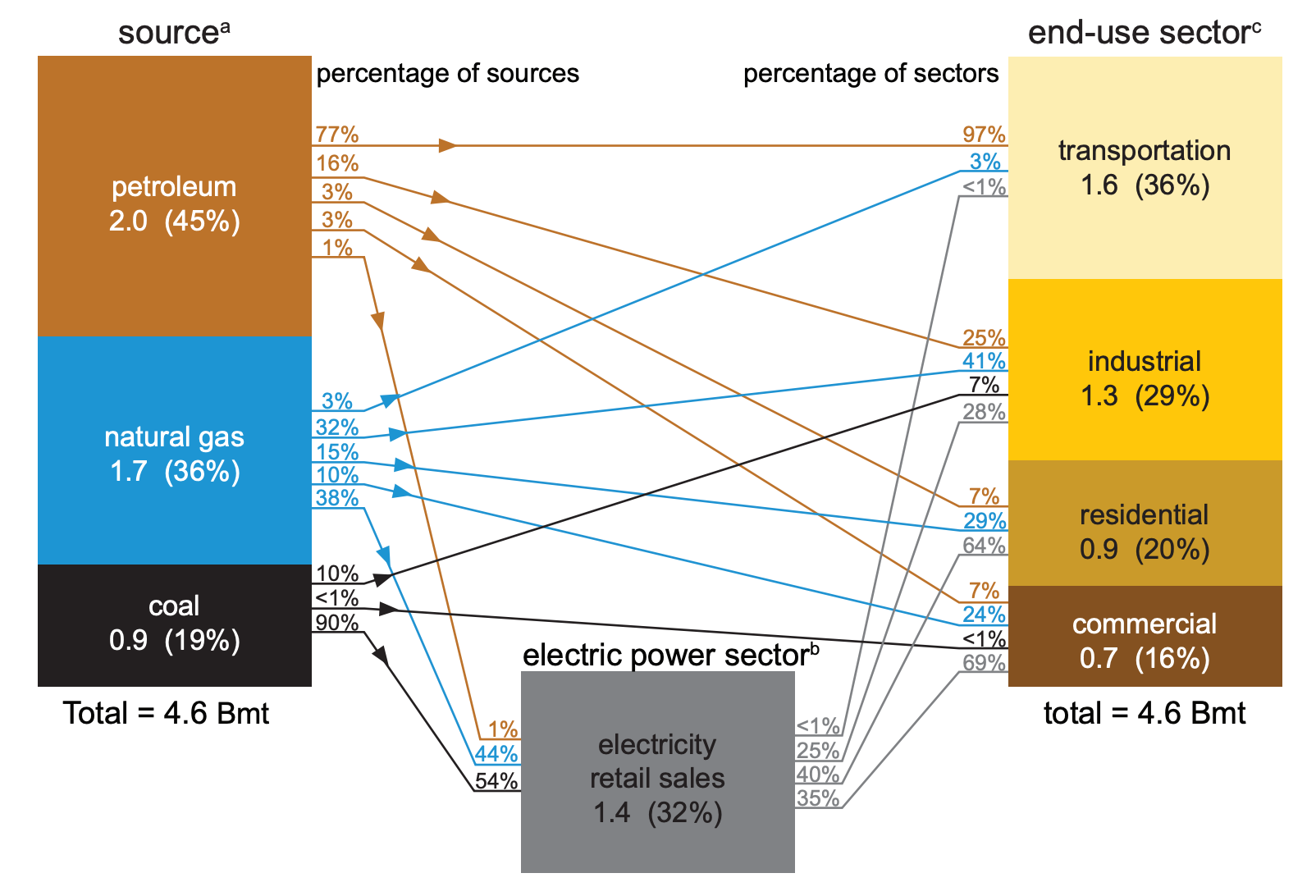
About 10% to 20% of building emissions are from the construction phase, in large part due to the steel and cement used to make buildings. The rest of the emissions come from operations, primarily from the electricity consumed and the fossil fuels burned for heating. Given their long lifetimes (e.g. common design life of 60 years), retrofitting existing structures is a key component of decarbonizing the sector.
In this article, I give a brief review of startups that are trying to reduce the carbon footprint of key building operations. I then highlight initiatives from incumbents that can accelerate net zero initiatives of real estate owners.
Current Landscape
Decarbonizing building operations can be tackled from multiple angles. For example, HVAC units can be switched for more efficient alternatives (e.g. heat pumps). Building Management Systems (BMS) can also be used to optimize HVAC, lighting and other systems such that a target occupancy comfort level is achieved with minimal resources. Buildings can also avail of on-site solar, as well as participate as a distributed energy resource to support their local electricity grids - two topics I wrote about previously.
The figure below shows examples of existing startups that are helping decarbonize residential and commercial buildings today. I organize them based on the actions they enable homeowners and building managers to take.
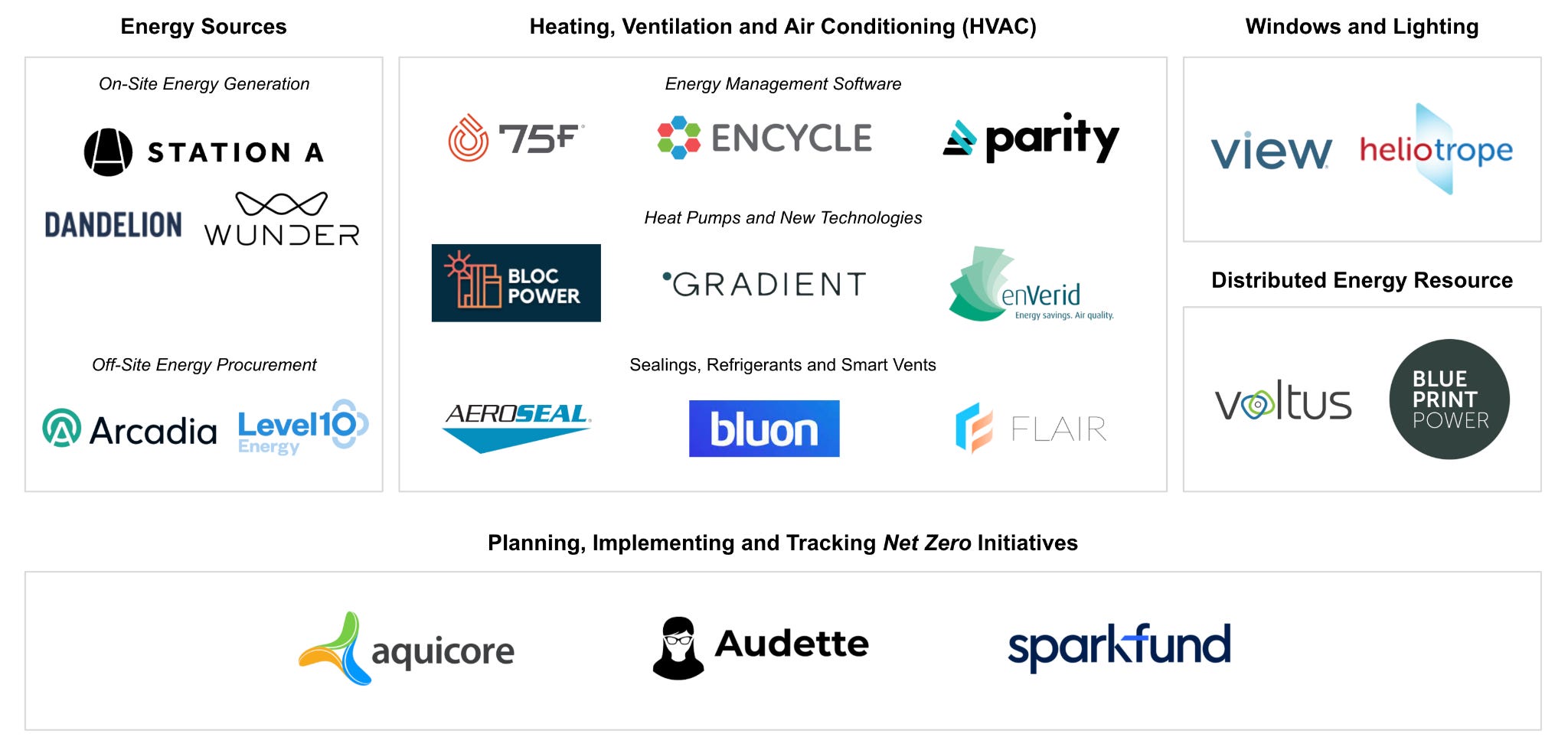
Switch energy sources by installing cleaner renewables for on-site use. 🇺🇸 Station A and 🇺🇸 Wunder Capital make it easy for commercial customers to procure on-site solar energy. Similarly, 🇺🇸 Dandelion Energy helps homeowners switch to geothermal heating.
Switch energy sources by procuring clean energy from off-site sources. 🇺🇸 LevelTen Energy is building a marketplace for PPAs for solar and other renewables. 🇺🇸 Arcadia is the largest platform available to customers wanting to access community solar in the US.
Use BMS to optimize HVAC energy use, which is the most energy intensive activity for most buildings. 🇺🇸 75F uses wireless sensors to monitor environmental variables (e.g. temperature, humidity, etc.) and uses this data to optimize HVAC controls. 🇨🇦 Parity and 🇨🇦 Encycle offer related solutions.
Switch HVAC units to more efficient alternatives. 🇺🇸 BlocPower and 🇺🇸 Gradient offer heat pump solutions which are more energy efficient than conventional boilers or A/C units. 🇺🇸 Enverid cleans indoor air, reducing the need to circulate massive amounts of outdoor air into buildings. This then allows the use of smaller HVAC units, which are less energy and carbon intensive.
Retrofit components and adjacent systems (e.g. seals, refrigerants, vents). 🇺🇸 Bluon has developed a new refrigerant that is less energy intensive than existing solutions. 🇺🇸 Flair offers a “smart vent” that balances temperatures across homes, while 🇺🇸 Aeroseal, a two-decade old company, uses a “water-based formula that effectively seals all the holes in the air ducts and vents”. All these solutions effectively reduce the energy consumption of existing buildings.
Use smart windows that automatically tint based on environmental factors (e.g. amount of light, temperature). 🇺🇸 View and 🇺🇸 Heliotrope are two examples.
Turn buildings into virtual power plants, which provide financial and climate benefits. 🇺🇸 Voltus and 🇺🇸 Blueprint Power are two examples. Blueprint Power just got acquired by oil giant bp.
Plan, implement and track net zero initiatives. 🇺🇸 Aquicore and 🇨🇦 Audette ingests existing building operational, equipment and other data, and uses them to build a net zero plan for building owners. Both companies offer analytics to track the progress of projects. 🇺🇸 Sparkfund takes this a step further by providing project financing, the option to outsource the work to them, as well as outcome-based guarantees - all wrapped up in their “As-a-Service” model.
Customer Value and Carbon Benefits
There are two main ways the solutions above tackle decarbonization. The first is through increasing resource efficiency. Using intelligent thermostats, installing smart windows and sealing leaks all reduce energy use. The second is switching fuel sources. This includes the use of renewables from on-site or off-site sources, as well as switching boilers and natural gas furnaces for heat pumps.
Both approaches offer both economic and decarbonization benefits for customers. For commercial property owners in particular, there is increasing pressure from board members, employees and tenants to make and meet net zero commitments.
Decarbonizing residential and commercial buildings is critical, and this goes beyond their large share of carbon emissions today. Buildings, through the air conditioning they provide, also demonstrate some of the most perverse impacts of climate change. James Temple writes:
Indeed, air conditioning represents one of the most insidious challenges of climate change, and one of the most difficult technological problems to fix. The more the world warms, the more we’ll need cooling—not merely for comfort, but for health and survival in large parts of the world.
But air conditioners themselves produce enough heat to measurably boost urban temperatures, and they leak out highly potent greenhouse gases too. Plus, those billions of energy-hungry new units will create one of the largest sources of rising electricity demand around the world.
The intensifying extreme weather events brought by climate change will put enormous strain on buildings and energy systems to provide adequate cooling and heating. Increasing efficiency (e.g. sealing cooling leaks, using more efficient refrigerants) is one way to reduce this vicious cycle. Another solution is to electrify buildings, which organizations like the Rocky Mountain Institute are pushing. Just like electric vehicles, electrifying buildings can benefit from using an electric grid that is becoming cleaner over time.
Potential Market Opportunities
Apart from startups, existing BMS incumbents have responded to the growing market demand for net zero buildings. For example, Honeywell’s Audit-to-Zero (A2Z) service offers outcome-based solutions to help customers hit their sustainability goals. They have completed over 6,000 guaranteed efficiency projects (e.g. HVAC retrofits) along with financing and managed services. Schneider Electric offers a similar service.
A third example is OpenBlue, which was launched by Johnson Controls (JCI) in 2020. OpenBlue is a digital platform designed to deliver smart and connected buildings. Moreover, it has decarbonization (“Net Zero Buildings”) as a strategic pillar. The figure below shows the key role incumbents like JCI can play in decarbonizing the buildings sector. Not only does JCI serve multiple residential and commercial markets, it already has existing HVAC, lighting and BMS products out in the market.
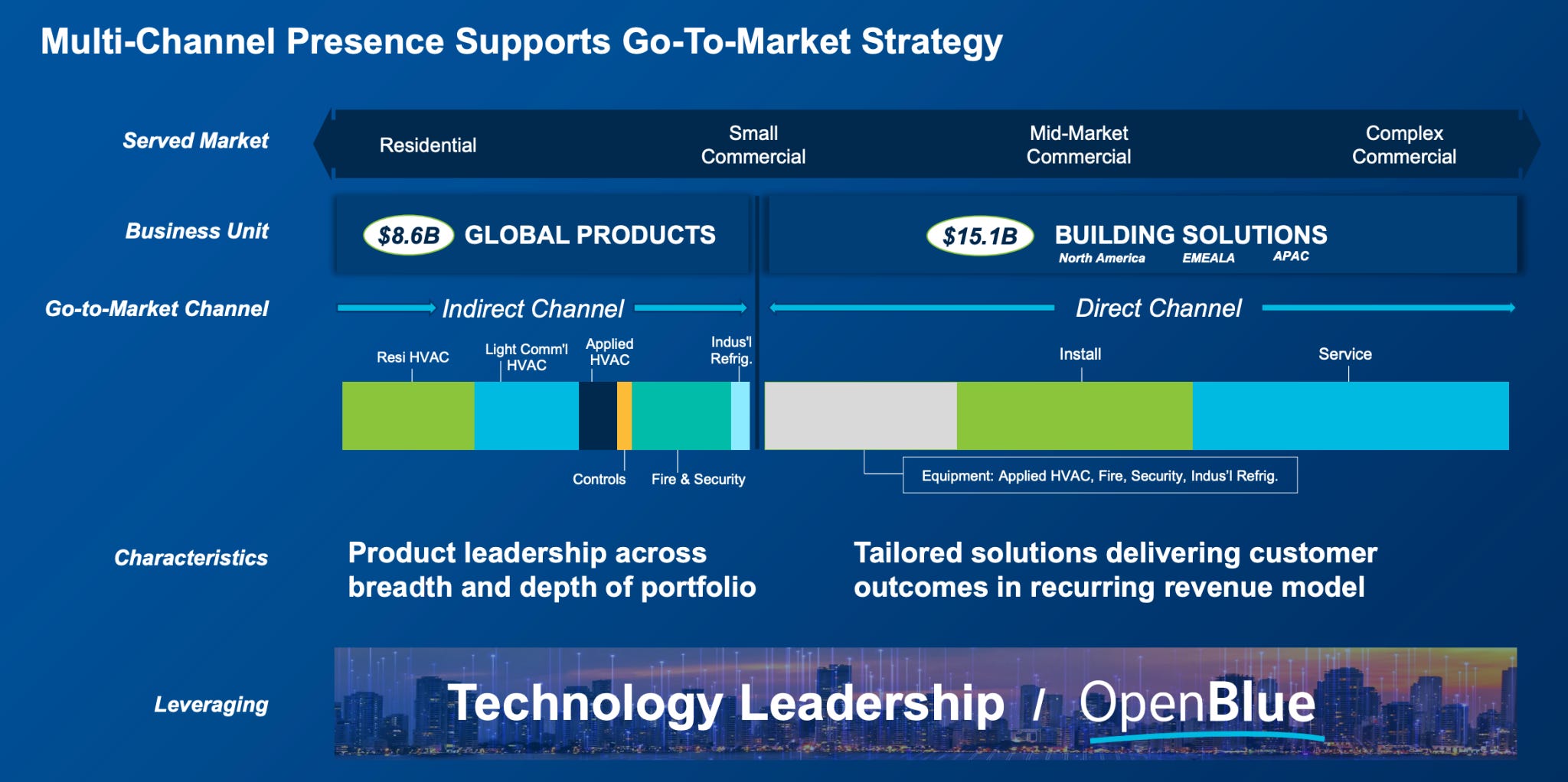
What if an incumbent like JCI drives the adoption of its OpenBlue platform with a build - as well as a buy and partner - strategy? That is, can JCI leverage its installed base and distribution to bring the best hardware and software decarbonization products to its customers, whether or not they were developed or are being offered by JCI? Might JCI even consider incentivizing startups - whether existing or new - to innovate around their OpenBlue platform, thereby bringing newer solutions faster to market?
Such an open strategy might not only grow OpenBlue’s market share, but also bring the best decarbonization solutions to customers. This might mean working with new entrants that are direct or indirect competitors, but could also help cement JCI’s leadership position in buildings (pun intended 😉).
Interested in ideas to decarbonize buildings? Subscribe for new issues every other week on decarbonization business opportunities.